Showing posts with label Reading. Show all posts

Saturday, February 22, 2014

A Couple of Reading Resources

In one of my last posts, I talked about what I planned on doing to help my DD along with reading. We've decided to spend a lot of time on vocab, and since she's reading above level, the biggest challenge has been understanding some of the text that's above the 5th grade reading level. Her gaining access to understanding is dependent on her becoming familiar with otherwise unfamiliar words. So I've decided that we're going to read and read and keep reading. In her reading when she encounters a word she isn't sure about she is to log that word.

I've created two logs as resources. One is for logging the books read, and the other is for logging vocabulary words encountered in those books. During her 30 minute reading, she's to log the words, and at a later time, she is to go back through the book and use context clues toward word meaning. Her instructions are to try to use the clues while reading, but writing them down at that point would take too much time away from reading.

Info on our featured book for the next couple of days, along with it's lesson plan, can be found below. Below, you will also find vocabulary and reading logs.These logs are two pages each. In case you need more sheets for the month (and you'll definitely need them for vocabulary), please print more of the last page of each document to suit your needs.

CLICK for Daily Reading Log CLICK for Vocabulary Reading Log
Author: Andrea Davis Pinkney
Reading Level: 5.5
About: The lives of ten amazing African-American women are included in this book about the search for human rights in America. From Harriet Tubman leading slaves along the Underground Railroad to Shirley Chisholm running for the Democratic Party's presidential candidacy, the inspirational acts of African-American women are celebrated.
Lesson Resource Link: Here

Wednesday, February 19, 2014

Two Black History Lessons

Basically our Black History has been reading books and discussing. Hopefully we'll have time to do more. If you're looking for books to read, then there are 8 on my previous post. Meanwhile, I wanted to share two lessons I found that correspond to two books we've read. I'll update as I find more. Please feel free to add your own in the comments.
Link to lesson plan.

Saturday, February 15, 2014

The Last Couple of Weeks In Review

Since Christmas break, we really haven't been able to get into a groove. We've had tons of frustrating moments, and we've just haven't gotten a lot done. To add to the fire, I'm trying to learn a couple computer languages, leaving less time for lesson planning. Since we're not in our house, we don't have dedicated space like before. We use our bedroom. Thankfully, I decided to change venues, making a break to the living room. Instead of just starting a lesson, I went back to how we did in kindergarten with something similar to a circle time. It was funny because she wanted to sing all our old circle time songs. The change of setting really prepared her for learning. When it's warmer, I may take her to the park a few times a week to do lessons there.

Here are some of the things we've done in the last couple of weeks. Don't judge! We run homeschool in the afternoons and on weekends, basically whenever we can. I'm looking forward to Valentine's Day. There will be no school on that day. That'll give us time to catch up on lessons, and I can actually do a deep condition on that hair of hers.

Math

This week we worked on making change. We used post-its to put prices on random items. Using real coins, we counted up from the amount charged using pennies until we got to a multiple of 5¢ or 10¢. Then we would used the appropriate coin(s) to get the original amount given by payee.

In addition, reviewed mentally adding double digits and +8 and +9 rules (+8,+9 video coming soon). I really want to concentrate on mental math, but like anything it takes lots of review and practice, practice, practice.

Writing

We're supposed to be ending our unit (which began at the beginning of the school year) in personal narratives (See Our Forray Into The Personal Narrative). She's been wanting to write fiction since the beginning. I'm getting ready to move on, but now she wants to write a book about her recent experiences. This week we began chapter one which is about two manuscript pages. For the first time, they don't include any drawings, and I like it better that way. My "bad mommy" thoughts are that I hope she has forgotten or that we can divert her attention and write a book of fiction. We need to move on from this never ending personal narrative unit. Maybe we'll do both. Who knows!

Reading

;

We haven't done a lot on reading, and honestly, I don't think she's improved that much. Her teacher says it's because she's already so advanced, but for me, I do believe that she should be a year ahead of where she placed at the beginning of the year (5th grade 3rd month). She's just now begun to start reading books at school at the grade level she tested in at the beginning of the year. The only thing that I think would keep her from reading higher would be vocabulary. Her vocabulary is already kind of cool for a 1st grader. I often giggle when she uses words like putrid or abhor. They're not big words, per se. They're just words you don't hear that often from someone her age. She's getting some of the words from her gifted class, but the great thing about it, is that she's actually using these words. I learned the words just for tests, but she's figuring out a way to use them in daily life.

My reading plan of attack is two fold. First we'll concentrate on vocabulary. I'll present more words, reward her for using them, remind her to use them, and use them myself. We already have a notebook to write down new words, but just haven't used it that much. We'll try to do a word daily and then add these words to her spelling lists. When the word is first introduced, it'll be her job to figure out the pronunciation. Then she'll have to write sentences using the word.

Secondly, we'll institute a timed reading session everyday- thirty minutes on weekdays and two thirty minute sessions on weekends if time permits. Our library day is Thursday. I'll pick out books at our local library. She'll pick out a book daily at her school library. Some of the books we're reading are above.

Drums

Same beat as here, Non-Drumma Momma.

Gymnastics

Bridges and handstands.

Black History

For music and black history, we've been learning "Lift Every Voice." She loves the tune. In addition we've been reading about African civilizations and important figures in African American history. Next week, I plan on using lessons from Jawanza Kunjufu's Lessons in History: A Celebration of Blackness.

Grammar

Finding Subject/ Verb, Linking Verb vs. Action Verbs, Adjectives. You can find the first part of our lesson, here.

Tuesday, January 28, 2014

Snow Days Provide Opportunity

For all of those who aren't familiar with the purpose of my blog, or with me, for that matter, I am a mother of one. I view the role of mother as my most important job in life. Also important is my role as wife to my husband (I have to remind myself of this lots of times), but even the most essential aspect of that role's importance is providing the environment to nurture our offspring.
I view education as being very important. I've been a teacher on just about every level imaginable, and from this experience I have concluded that a lot of what's done at school is a disservice to some of our children.

My Goto Example of Education Disservice: Sight Words

For example, I am a firm believer that not every child needs to be introduced to sight words. Sight words themselves aren't the culprit, but the idea of a list of words for students to memorize, especially when words on that list are decodable, is. I feel that sight words are used because it's easier for the teacher. No real concept is to be taught when using sight words. Sight word instruction, while sometimes inventive, is merely presenting words and helping students remember them by sight.
I taught sight words to a class of four years olds. My youngest kid of 3 progressed the fastest and within her first week in my class could recite several sight word books. Her mom was so amazed that her 3 year old was "reading." I really wanted to tell the mom that nothing about what this child was doing is "reading" and that I could really teach her 3 y.o. to read if the school would let me bring my own materials, implemented a real discipline plan, and allowed the teacher to deviate from that curriculum and actually gave time for actual instruction instead of going around the building to have useless extra-curricular classes (I love these classes, if done in a systematic way that actually produced a skill- I mean why go to a class to learn that book= libra, but not be able to construct any Spanish phrases) all day, her 3 y.o would be learning to read. But for as long as unknowing parents are impressed by the non-education of our children, these schools will continue to do what they already do.(Please see Some May Call Me the Sight Word Nazi and How I Taught My Daughter to Read.)

For the Most Part, Teachers Are Not the Problem

I am not hear to bash teachers. I am in my own regard a teacher at heart. Society has painted teachers as people who enter the field to make money, and while in this economy, there may be some truth to that, I have not met a teacher that did not want his class to do well or her students to master the state's standards. The people aren't the problem, but the approach. The fact is that there is no real way to differentiate to meet every single one of the class' 30 kids' needs. It is my experience that differentiation in the classroom is really for those who underperform. Enough is done to ensure that students stay on level. Often times lots of energy goes to bringing up those low level students, but only if there are a lot of them in the class to begin with. And then higher performing students' parents are coaxed along in order to keep their child in the class/school to bring up test scores.
If your three or four year old, or even two year old, is ready to learn to read, why wait until age 6 to teach them. Right now, my first grader can add two digit numbers in her head and extremely large numbers on paper. We're beginning to learn times tables, but have I seen any of this work come home? Will any of these skills be nurtured in any way at her school? The answer is a swift "no." On the Star reading assessment, my child tested on the 5th grade reading comprehension level. Her teacher was proud, I guess, because I heard about it from other parents before I was informed by the school. But have I seen any 5th grade books come home? The idea is supposed to be that at the end of the year, or at least at the beginning of next year, she's advanced a complete year, comprehending at 6.3. Will she this year? If so, it won't be because of work she's done at school, or even work that's sent home from school.

Conventional Schools Are Not Equipped to Meet the Needs of Every Single Child

What I expect for my child- what every child deserves- is nearly impossible for the school to do as it is set up. First of all the idea of grade levels being associated with age instead of skill or knowledge is ridiculous. The idea that you have to spend all year learning something that you can learn in a month is equally ridiculous, but how else is group education to function? I will admit that in recent years great gains have been made in differentiation with regard to reading, but this is really only on what the students read, not so much on direct instruction. Math, however, hasn't come as far along.
Everyday I ask my child did she learn anything new in her regular class. Except for one day, the answer has been "no." Now I do admit that she's exposed to different things in the gifted program. Things that I would not think to do, they've done. For that, I'm thankful.

More About Me and This Here Blog

I view myself as a part-time homeschooler. Why don't I homeschool my daughter full time? I got to come-up just a bit to do that, and believe me, I've been working on that. Academically, I got her, but some of the other things suffered when she was homeschooled due to her not being around others in her age group, and not having certain experiences. But with just a little more work on my part, I plan to eliminate these issues with my own homeschool.
My mantra is that no one at any school, public or private, is able to teach my daughter as well as I. I am my child's primary (not only first, but chief) teacher. And it's not that I'm such a good teacher. It's that I know my daughter. I've taken the time to get to know her, and at this stage (and I hope always) I am one of the ones who is most influential to her. She is the clay, and I am the primary molder. I take this job seriously. This blog documents our educational experiences.

You, My Dear, Are Qualified

How is it that I am able to teach my child with no teaching degree or certification? I do have an advantage in that I've actually taught in schools. I know how to make an effective lesson plan. Based off of the standards, I can develop my own curriculum and curriculum maps. I can read and understand the maps of school districts and compare and contrast them. I can read testing data. I can develop adequate pre and post assessments. I can ask higher order, open ended questions, basing my lesson on the essential question. I've been instructed on positive behavior and teacher efficacy. I have an advantage, but still I have to research, research, research. I research what it is that my child should know and/ or wants to know and/or what I want her to know. Then I research the best way to teach it. That's all, boo. You are totally qualified to teach your own child. Even if you don't know yourself, you can follow this model- research, learn, teach. If for some reason that doesn't work, then you contract the teaching out. Maybe you can leave that aspect to the schools, loved one, or to a tutor.

Take Snow Day Action

So if you have time during these GA snow days, instead of being concerned about the time your learner is missing from school, take the time to fill in the gaps in her education. You as a parent can do more than visit the school to help your child in the academic arena. You can do more than making sure that he gets his homework. I encourage you to take on the role of educator for your children. Work that role, rather it be daily or weekly or monthly. I encourage you to view these "free days" as an opportunity to academically educate your own child. In your researching phase, you'll probably learn that the best way to approach a subject isn't congruent with the school's approach, anyway. Follow the model and the motto. Let's say it together.
I am my child's primary and best teacher. I honor this responsibility and move through it with gratitude, knowing that I am doing what's best for my child. I am qualified by God for this position, and thusly, I take the time to research, learn, and teach.
Happy Teaching!!!

Sunday, November 24, 2013

Some May Call Me The Sight Word Nazi

Every chance I get, I discourage sight word lists amongst parents with young children. Why? I can't possibly know what I'm talking about? I'm not a reading specialist. Surely, they went to school to teach reading. They would know more than I do. Who am I to suggest such things?

The first thing we should recognize is that all educational approaches are just theories. While some are widely accepted, none of these theories have become law. These theories usually have been manipulated to show the theorist's desired outcome. Amazingly, our educational system is in the dumps while so many of these theories are "proven" to get results. Almost all, if not all, of these theories claim to be research driven.

Stance 1: Sight Words Are The Devil

At the time I decided to teach my child to read, all the programs I looked into for early reading were phonics driven. All of them cited research blaming the "look-say" reading method for the downward spiral of America's education system. They also reported that dyslexia was not a true mental disorder, but a reading impairment brought on by children using the look-say method of reading. Because these students are only remembering the shapes of words, instead of the sounds of word components, students can often confuse words. Also, imposing the order of letters would happen more frequently for those who don't know how to decode the word from left to right.

Stance 2: Sight Words Are A Necessity

Indeed, I thought sight words were the devil until I spoke with a reading teacher, a principal, and a reading specialist where I was working. They made points that I thought were valid. For example, there is the forever present reason given for the necessity of sight words- that some words can't be decoded but must be learned by sight. OK, that's a good reason. Then teachers everywhere will say sight words are necessary for fluency which is also aids in comprehension, yet another great reason for sight words.

Back To Stance 1: Those Devilish Sight Words

May the record reflect that while I taught school, I was a great academic teacher to all but my own child. Time just did not afford much reading instruction. We were blessed in that we spent time learning in between my teaching assignments and during the summers. At this time my four year old was almost a master at decoding CVC words, something that she was able to do when she was 3, but she wasn't at the point where she could pick up a book and read it, not unless it was a decodable reader.

Somewhat skeptically, I began to support the use of sight words, until... I had to test fourth grade students for remediation in reading. Quite remarkably, I had to test students of the teacher who touted the importance of sight words. Though I don't remember the exact word, I do remember that every person that I tested incorrectly "read" the word phone. Let's say that the word was prone. All of the students were using what the whole word resembled, instead of blending the phonemes to determine the word. Every single person said phone. Somewhere down the line they all must have learned phone as a sight word.

Here I was armed with all the ammunition my little heart needed to leave those pesky sight words alone. The Reading Lesson became our religious reading guide. At the end my daughter could actually pick up books, some of which were pretty hard, and read them.
Not quite a Nazi, but...

My position has softened just a bit. Do I think that every child should be taught sight words? Not in your wildest dreams. Can sight words be beneficial to some children? I think so.

When my child went to Kindergarten, she could read almost anything, but at first they wouldn't label her as such. Why? Because she wasn't fluent enough. Honestly, she had only been reading books for about a month. She was doing extremely well, but I knew what she was capable of reading and comprehending, and I wanted the school to acknowledge it. Soon, I learned not to care too much about what the school thought, but I also saw the value in her becoming a more fluent reader. This is where sight word lists could be extremely helpful.

Did we ever start working with sight word lists? Not really. We didn't even do what the school required. She came in knowing the words on the list, except for two. They ended up giving her the four first grade lists. Her teacher suggested all this sight word work. We just never had time to do it. I did occasionally, however, try to add decodable sight words to her spelling lists. That's all.

Because I wanted to give her a chance to practice her reading skills, we never dwelled on reading the same book(s) over and over again. This was probably really helpful in developing accuracy, but not at all helpful in developing fluency. In regards to fluency, I would have changed two things. We would have had special "repeat" books on deck, and I would have modeled fluent reading by reading to her more. Once she started reading it became all about reading practice. This is no longer the case.

Doing My Job and Teaching Sight Words

Last year, I taught PK4. I thought that it would be easier and afford me more time at home. Boy, was I wrong. At any rate, the curriculum called for sight words. In my opinion, most of the people were misinformed about sight words. One popular question among parents was, "How's she doing with her sight words." Somehow, parents believed that these magical sight words would mystically lead their children to the land of reading. No parent has ever asked about the blending of sounds. No parent ever asked me about the steps toward reading. Everyone only asked about those sight words. I tried to be as informative as I could without saying that these people have no clue in what it takes to ensure successful reading.

I do understand the buzz about sight words. Lots of kids can begin learning to read with only sight words. It's simple to include sight words in lessons. The turnaround time in being able to "read" one's first sentence/ book is irresistibly fast. My best "reader" in my class was the youngest of the students. She was the last to be moved into my class. On the first day, she sight-word-read circles around the other students. Why? Because she had 0 knowledge of letter/ sound relationships. She had not yet begun to identify the individual letters with their corresponding sounds. It was much easier for her to learn what the whole word looked like without the need to associate the individual letters with anything. That week, I constructed sight word books for my students (See. I can't possibly be a SWN.) Her mom was so proud that the child who had only been in my class a couple of days was already "reading." This student became disinterested with the exactness needed for true reading. While some of the others were starting to decode, with me, she never got so far. She began to disengage in lessons until sight word time. I'm afraid that she gained a false sense of reading accomplishment that could only be overcome with a good phonics reading program, though not offered to students in PK at that school.

Teaching students to read without the use of sight words can be taxing, but is rewarding. Honestly, I think it's hard to teach a phonics program to a group of students. I really would advise parents to start teaching their children how to read before they get to school. That way you can ensure that your child has the basic building blocks for good sound reading. A program/ book can be as cheap as 10 bucks. Choose an affordable but highly rated program and just get started.

I Actually Love Sight Words

My daughter and I do sometimes go over sight word lists, but I like to think that a sight word is word that becomes recognized by sight after it has been decoded several (maybe several hundred) times.Sorry, but there's no Nazi here.

Thursday, October 17, 2013

How I Taught My Daughter To Read/ Teaching Reading Advice

Just after Lyla turned two, I finally bought her the Teach Your Baby To Read program. We received the program. It looked great. We tried it out, and my DD hated it. It was boring as all get out. It felt like flash cards on video. We plowed through it a couple of times, and she was starting to memorize words, but we didn't do it often because it was just so tedious. If you choose to do this program I suggest starting at a younger age. If your child has played video games or enjoys watching and can learn from Sesame Street, then this program will probably be a snore fest.

Not doing anything, I noticed that Lyla had picked up a couple of sight words. Her first was lock. She saw this word everyday on our car door. She asked me what l-o-c-k spelled, and from there, her next word was toy which she learned from Toy Story. This was not unique to her. Others in her 3 y.o. class (I have always requested that she be put in a class slightly older until public school) were doing the same.

For about 6 months, we really didn't do anything. What happened next? My job let me go. Enrollment was low. The school had to make adjustments. They decided to get rid of the music department all together at the school (as well as security guards, guidance counselors, and academic coaches). So here I was back to staying at home which gave me time to do some research.

Out of Sight (Words)

I searched the internet for the best ways to teach reading. I was heavily influenced by youtube vids. I decided that we weren't going to do site words at all. I began searching for the perfect program. Teach Your Child To Read In 100 Easy Lessons kept coming up. We tried. Lyla didn't like. Five lessons is about all we could make it through. Actually we could have done more. I was a bit inconsistent, and my DD was happy to miss those reading lessons.

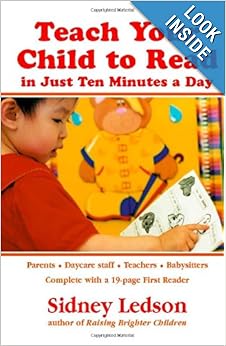
Although we only got through 5% of the book, I learned a lot. I had been trained on teaching phonemic awareness, but this program found a way to focus on phonics (blending of phonemes into words when reading) and phonemic awareness (ability to hear phonemes or the smallest units of sound represented by letters within a word) without having to segment the sounds at all. Our next venture led us to Teach Your Child to Read in Just 10 Minutes a Day." This stuck for a while. The book offers fun ideas for teaching reading, but I didn't build the wood toy that it suggested, nor did I tape letters to any blocks. I simply typed out words and letters and laminated them. Like most other phonics programs, you start out with a letter, learn it's sound, recognize the sound in words you here and then learn more letters. Once you have two letters you can start blending. This book starts with u then it adds p. The first word to learn is up. From there they add a c and then an a and the subsequent words that can be made from these letters. From doing these I learned that Lyla was already decoding words. I think that those five lessons from Teach Your Child To Read In 100 Easy Lessons really worked. We just needed practice reading CVC (consanat-vowel-consonant) words. We progressed but we kinda got hung up on what I call n-controlled vowels. For example, to my ears it's kinda confusing to teach ing to me the i sounds like a long e. The same is true for -ink or -ank. We hadn't learned any words with long vowel sounds. This was a bit confusing. How many people say a short a sound in bank? It's doable, but there is a bit of grey area there. Our relationship with this Kindle download ended abruptly.

What Stuck

What did we try next? Finally we did The Reading Lesson: Teach Your Child to Read in 20 Easy Lessons. WARNING: You will not be able to sit down 20 times and teach your child to read. It takes more consistency. If you work hard, you can do a lesson a week. If you want a more fluent reader then take longer on the lessons and make sure your child repeats each page. Have your child work on each page until he can read it smoothly. Then move on. We didn't do that, and although my daughter can just about read anything, we're working to increase her fluency and speed. She can read a 5th grade book, but would she read it as fast (frequency) or as smoothly as a fifth grader? She does great, but there is always room for improvement.

It's All About the Process

While the process started at 3, we really didn't pick up a book (aside from decodable books) for her to read on her own until a month before kindergarten. She was 5 1/2. This is the normal time for most kids to read. However at this time she could pick up a 2nd grade book and read it, not as fluently or as fast as a second grader would read, but she could read these books and gather meaning from them. The month before school. We read like crazy.

Wait! Where's The Rewind Button?

If I could find that rewind button and do it all over again I would have started with Teach Your Child to Read in Just Ten Minutes A Day or any phonics based reading program (you can design your own) at 2 1/2. No pressure- this would just be done in a fun, leisurely way, maybe a letter a week type situation. Then, at three I would make sure she could decode. The previous book should have given her decoding skills, but if she couldn't decode, we would spend our time learning. At this point I would introduce decodable readers (we made some of ours). If she decodes well at three, then I would introduce The Reading Lesson at three. If not, I would wait until she's 3 1/2. If the child is nowhere near decoding,then I would start with a few lessons in Teach Your Child to Read in 100 Easy Lesson and then continue to The Reading Lesson.

Back In Sight?

I personally don't think sight words are harmful. It's just better to learn to decode first. With that being said, I would try my hardest to teach my child to read before she starts kindergarten. Sight words would add to her reading, rather than take away. For kids with great memories, sight words may come easy. I personally (I am only a mother, not a reading specialist) would neither encourage, nor dissuade sight word practices. Let the child do what comes naturally to them in this regard. If your young child teaches himself to read by memorizing what words look like, I would immediately begin teaching letter sounds. I worked at a daycare where a genius four year old boy could read. I sat him down and asked him to read for me. I was blown away. His fluency was so much better than that of my daughter. Depending on what kind of reading he did at home, he probably could read harder books than she could, but he wasn't accurate in his reading. He would say what he thought some of the words and phrases were, rather than reading what was on the page. It wasn't a bad thing. I was thoroughly impressed. I am sure that as he embraces phonics in school, he will do well, but for some kids this is not an easy fix.

My Unsolicited, Yet Earnest Advice

My advice to parents who have a kindergartner who will be introduced to sight words? Let the school worry about sight words. You run a phonics program at home. If you have to help your child with sight words for school, do so, but try to relate it to phonics as much as possible. When your child starts school, the teacher does an assessment. I probably did too much, but everyday I would ask my child did the teacher call you up to her desk today? Did you read for her, today? Did anyone take you out of class, today? First grade is a bit different, but in kindergarten gather as much information as you can about assessments from your child. Ask your teacher what reading level your child is on. Ask to see how this was determined and what measures were used. Familiarize/ research the form of reading assessment and how a child is moved along from level to level. Ask your child's teacher for reading level information about your child. More than likely, they will not offer you this info. You have to ask. You don't want to be too pushy. As a teacher, I have seen how a parent's pushiness can affect how people treat the child. You always want to remain in good standing with the teacher (a lesson I am still learning), but let that teacher know that you know.

Once you have been given a reading level for your child, get books on an easier level (if applicable), on level, and on the next level. Can your child read books on the easier level? You want to give your child random books on random subjects. If your child can't pick up a random book at an easier level and read it, your child is probably not reading, but practicing memorization. Run you phonics program. If your child can read the easier level, keep giving them books to read. Use the easier and on level books to build fluency. Find a book your child likes and let them read it over and over and over again. Also make sure to model good reading to your child. Your child is on his way, but still run your own phonic and/or word study program at home.

If you're homeschooling, read up on Fontas and Pinnell or any trusted system for determining reading levels.

Wednesday, October 2, 2013

Our Run-In With GA's Vaccination Policies/ What We're Reading

This morning we've gotten off to a good start. We really didn't have to rush. My Lyla was all smiles, and we even had time to practice addition while waiting on the bus to take her to school. We are developing her mental math skills and currently working on adding double digits. She's coming along very well, but we can definitely use the practice for speed. I've learned from my years teaching in schools how amazing young students are. I'm amazed at how children are able to retain things. Things that I might have said once to my child are stored in her brain for later use.

As an example, when Lyla was 3 or maybe 4 she had trouble telling the difference between b and d. I simply showed her Bb and Dd and said that Dd's talk and Bb's walk. .Just the other day she wrote one of the letters backward, then she erased and I heard her say that same saying. I had to ask her from where did she get it, and she said that she got it from me a long time ago. Lesson learned. Children remember, so teach well.

Yesterday, my DD had to get a shot for school. I hate the idea of forced inoculations. My husband and I disagree about this one. He goes with the conventional way of thinking. I, on the other hand, am not here for putting those foreign substances inside of my child. I myself have never had a vaccination due to religious exemption. I really wished I had done the same for my child. Every time,except for the first one, I have felt like I, in some way, have let my child down by allowing them to put that stuff into her body.

Yesterday, I went to the health department (hadn't figured out how our insurance is accepted in GA, yet) to get an ear, eye, and dental screening. Then I am bombarded with the news that my child needs another Hep B shot. You know, the shot that she already had at 5 months old? Yeah, that one. It just so happens that in the state of GA, you have to get it after you've turned 6 months. When this very polite lady told me that, I couldn't help but sighing, "I officially hate the state of Georgia."

Is the vaccine given at five months ineffective? Is it only that way in the state of GA? Why does she even need a Hep B shot? I understand when you're a baby and can get it from your mother, but now? at six? It's basically transmitted the same way that HIV is. It isn't at all necessary in my view. I almost cried because here I am doing this to my daughter again.

Now do I really hate the state of GA? Probably not, but it does make me feel like there should be some consistency among states about what is excepted and what is not. I could link to lots of articles against vaccinations, but I will link to a rather mild one about over vaccinating.

This is probably where homeschooling would have come in handy. THE STRUGGLE within is real. One day I'll explain why I chose not to homeschool exclusively, but today I won't bore you with the details. Instead I'll leave you with some of the chapter books we've either read or will read soon enough.

Book/ Series Info Our Views


Make Way for Dyamonde Daniel


Rich: A Dyamonde Daniel Story

4 Books in Series

Make Way For Dyamonde Daniel
Author: Nikki Grimes
Grade level Equivalent: 3.7
Lexile Measure: 620L

Dyamonde Daniel may be new in town, but that doesn't stop her from making a place for herself. With her can-do attitude and awesome brain power, she takes the whole neighborhood by storm.

Rich: A Dyamonde Daniel Story
Grade level Equivalent: 3.5

In this fantastic follow-up to Make Way for Dyamonde Daniel, Nikki Grimes tackles big issues like homelessness in a sensitive, kid-friendly way. Dymonde’s can-do attitude and lively spirit will endear her to readers.

Single parentdom seems to be trending in lots of these popular books by AA authors. I guess that it's a part of our communities, but it would be nice to show a two parent home with one of the characters. Also trending would be the snazzy attitudes these characters display. To this I can relate; however, because my daughter is such a young reader, I guard reading time carefully.

Dyamonde Daniel is a delightful character, full of stregnth. My daughter related well to her, being that she is the new girl at school this year. These were entertaining reads for my DD.


Nikki & Deja


Nikki & Deja: Birthday Blues

6 Books in Series

Nikki & Deja
Author: Karen English
Grade Level Equivalent: 3.9
Lexile: 670L

When an arrogant new girl comes to school, third-graders and best friends Nikki and Deja decide to form a club that would exclude her but find the results not what they expected.

Nikki & Deja: Birthday Blues
Author: Karen English
Grade Level Equivalent: 4.3
Lexile: 700L

As her eighth birthday approaches, Deja's biggest concern is whether her father will attend her party, until her aunt is called away on business and a classmate schedules a "just because party" on the same afternoon.


This series of books is highly rated on Amazon.com. If I'm not mistaken, Karen English is an educator. This made me excited to get one of the books for my DD.

We got the Birthday Blues book from the library and after reading a chapter, we decided to come back to it later. With this particular series I felt it best to read the series in order. It could also be that this book is a little harder than the others.

We're going to start the Ruby and Sassy series books first.


Brand New School, Brave New Ruby

Four Books in Series

Brand New School, Brave New Ruby
Authour: Derrick Barnes
Grade Level Equivalent: 4.3
Lexile Measure®:700L

When Ruby Booker starts third grade at Hope Road Academy, the same school her three illustrious older brothers attend, she tries hard to make an impression of her own.


This has the potential to be my fav. The main character Ruby has three brothers, and guess what? She has two parents in her home. I love one of the scenes where her father is the one making them breakfast. My daughter adores Ruby. We are halfway finished with book 1 of a 4 book series.

Later I'll add Sugar Plum Ballerinas, Danitra Brown, and Sassy series to the mix.

Sunday, September 29, 2013

Our Foray Into The Personal Narrative

I actually began this post about 3 weeks ago, but just didn't publish it until now.

Yesterday's reading was Vera Williams' A Chair For My Mother. We used this book to further our example of a personal narrative for our writing unit. Williams does a really great job at stretching the story.

Today, just before writing our own personal narrative, we reread the excerpt where the narrator tells of the loss of her home due to a fire. We take notice of all the detail- great examples of stretching. While the point is to tell about the loss of her home, the narrator takes us through the events that lead up to her discovering the fire (the shopping, bus ride, tulips, etc.)

Personal narratives are somewhat daunting for Lyla. She feels that everything has to be a made-up story. She's extremely creative, so it was a little hard to get her just to think about what actually happened. Also she takes so long to draw. I am definitely going to require that drawing comes later from here on out.

Our preplanning really starts with the pictures. I make little booklets for her. This really helps the writing to be longer. This probably should have even more pages, but we could always add pages later. Here are the results.

CLICK TO ENLARGE
AND REDUCE!!!

On the first page, her illustration is of me walking her to the school bus. My DD thought it quite amusing to leave me headless. More importantly, she could have gone into detail about the walk down the driveway. Is it dark? Is it scary? What does it sound like? I wanted to add that, but this whole process was a little labored so we didn't. I may make it another assignment, although from what I've read, at this stage in the game I shouldn't give her topics. I may just do it anyway.

Monday, August 26, 2013

Flirting With Disaster

Days with Frog and Toad

Over the weekend my daughter and I sat to do a reading lesson. I decided that she could read the first story of Days with Frog and Toad. This is a particularly easy book for her to read, but I chose it just to observe her skills for reading silently. Is she still comprehending? Do we need to talk about rereading until she gets it? She particularly enjoyed this reading because I gave her post-its to make notes while she read. I think that really made her feel like a big girl and the next time we go through a book together, I will model it for her.

Things go very smoothly. Even with jotting down little notes, she finishes too quickly. I was trying to get other things ready while she read. Anyway, she retells the story, and we discuss the conflict and resolution. She's on it.

It's time to write about the lesson she learned in the book. Since she's been working hard all morning, I let her choose whether she wanted to draw or write first. Of course she chose draw. Her reasoning being that the details of her drawing would help her to write. Good choice? Not so much. She gets really upset that her drawing isn't coming out the way she planned. To me it looks great, but she erases it all. Tries again, but she thinks her toad looks more like the frog in the story. This upsets her to no apparent end, and she cries and nothing I do seems to console her. I would think punishment, but she's genuinely upset that she can't do it.

What did I do? I called her dad. We both talk her down, and as you can imagine I could only get one sentence from her writing.

What could I have done differently? I am officially soliciting advice for how to handle these meltdowns.

Until next time...

Cheers,

Faith